MEDICINE & HEALTHCARE
By TrendScope Daily Team · Last updated November 8, 2026
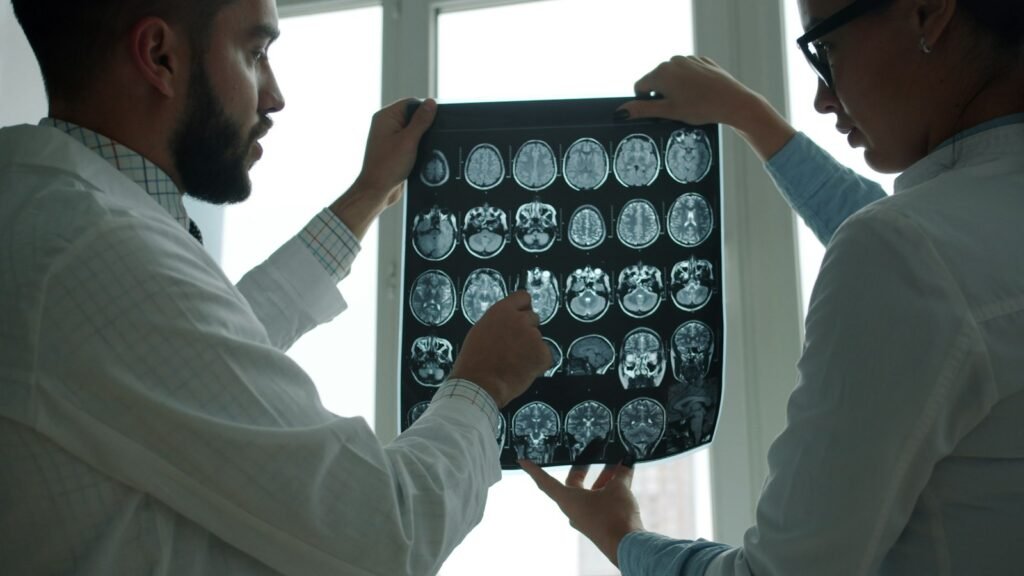
When a patient is told their case is “going to board,” it usually means more good news than bad. It means a surgeon, a medical oncologist, a radiation oncologist, a radiologist and a pathologist are about to sit in the same room, look at the same scans and biopsy slides, and argue out a treatment plan together before anyone tells the patient what comes next. This meeting is called a tumor board, and it has quietly become one of the most important pieces of how modern cancer care actually gets decided — not through a single doctor’s judgment call, but through a structured, built-in second opinion. Here is what a tumor board is, how it works, and what the evidence does and does not say about what it changes for patients.
What a Tumor Board Actually Is
A tumor board — also called a multidisciplinary team (MDT) meeting in the UK and several other countries — is a regularly scheduled meeting where doctors from different cancer-related specialties review individual patient cases together and recommend a course of treatment. The U.S. National Cancer Institute’s Dictionary of Cancer Terms describes this kind of review as a treatment-planning approach in which a number of doctors who are experts in different specialties review and discuss the medical condition and treatment options of a patient. The point is simple: cancer treatment usually involves surgery, chemotherapy, radiation, immunotherapy or some combination of them, and no single specialty has the full picture on its own. A tumor board is the structure built to put that full picture together before treatment starts.
Who Sits in the Room
A typical tumor board brings together a surgical oncologist, one or more medical oncologists, a radiation oncologist, a radiologist who reads the imaging, and a pathologist who reviews the biopsy or surgical specimen under the microscope. Larger centers often add a genetic counselor, an oncology nurse, a palliative care specialist, a social worker, and sometimes a clinical trial coordinator. Comprehensive cancer centers frequently run separate, disease-specific boards — one for breast cancer, one for lung cancer, one for gastrointestinal cancers — because the relevant evidence and treatment options differ enough between cancer types that a single generalist board isn’t practical.
“It gives multiple second opinions instantly.”
— Stephen C. Rubin, MD, Division Chief of Gynecologic Oncology, Fox Chase Cancer Center
How a Case Actually Gets Reviewed
The process is fairly consistent across hospitals that run tumor boards well. A treating doctor refers a case — often one that’s complex, rare, or doesn’t have one obvious standard treatment — ahead of the scheduled meeting. The case is presented with the patient’s history, imaging, and pathology report, sometimes with the actual scan images and slides pulled up for everyone to see. The group discusses the findings, weighs the treatment options against current clinical guidelines, and reaches a consensus recommendation, which is documented and sent back to the treating doctor. That doctor — not the board as a group — remains responsible for discussing the plan with the patient and for making the final call together with them, since things like a patient’s overall health, preferences, and circumstances don’t always come through fully in a case presentation.
Tumor Boards in India: A Growing but Uneven Picture
India’s larger cancer centers have been building out tumor boards for years, and the bigger recent shift has been toward making them reach beyond their own hospital walls. Tata Memorial Hospital in Mumbai, one of India’s largest cancer centers, launched a virtual tumor board in 2017 specifically so that oncologists treating patients in smaller towns and cities could get a Tata Memorial specialist panel’s opinion without the patient having to travel. JIPMER in Puducherry has run a similar virtual tumor board model for its referral network.
A 2022 retrospective study of Tata Memorial’s molecular tumor board — a related but more specific kind of board focused on interpreting complex genomic test results — reviewed 339 cancer cases over about two years and recommended a change in management in 60.7% of them. But the same study is a useful reminder that a recommendation and an outcome aren’t the same thing: oncologists went on to implement a newly recommended therapy in only 44.2% of cases where one was suggested, which the study’s authors linked largely to limited access to clinical trials and targeted drugs in India compared with some other countries. That gap between what a board recommends and what a patient can actually access is worth knowing about if you’re navigating cancer care in India — a tumor board can tell you what the evidence-based options are, but availability and cost still shape which of those options are realistic.
What the Evidence Does and Doesn’t Show
Research on tumor boards is reasonably consistent on one point: reviewing a case with multiple specialists changes the treatment plan in a meaningful share of cases — various studies, including the India figures above, put that somewhere between roughly 30% and 60%, depending on the cancer type and how “change” is defined. Multidisciplinary review is also associated with care that more closely follows established clinical guidelines, and it is now standard practice at accredited cancer centers for exactly that reason.
What the evidence does not clearly establish is a guaranteed survival benefit from board review itself, separate from the quality of care a hospital already provides. Some individual studies have reported better outcomes for patients whose care followed board recommendations, but a cancer center that runs a well-functioning tumor board likely also has more specialists, better equipment, and more experience across the board — making it hard to isolate the board meeting itself as the cause. A tumor board is best understood as a quality and consistency mechanism, not a treatment in itself, and not a substitute for the conversation a patient has with their own treating doctor about what a recommended plan actually means for them.
It’s also worth knowing that expert-panel review isn’t unique to the room where your own case gets discussed. New cancer therapies reach patients only after review by regulatory experts too — the kind of scrutiny that, for instance, led the FDA to approve an immunotherapy letting some rectal cancer patients skip surgery entirely after reviewing trial results. The same multi-expert model shows up well beyond oncology too, including in recent FDA reviews of a Duchenne muscular dystrophy cell therapy and a sickle cell disease pill, where regulators weighed evidence from multiple specialists before deciding whether — and when — a treatment was ready for patients.
Sources: the U.S. National Cancer Institute’s Dictionary of Cancer Terms entry on tumor board review, Fox Chase Cancer Center’s explainer on the role of tumor boards in cancer care, and a 2022 study on Tata Memorial Hospital’s molecular tumor board published via the National Library of Medicine.
Quick questions
What happens when your cancer case “goes to tumor board”?
A panel of specialists — typically a surgeon, medical oncologist, radiation oncologist, radiologist and pathologist — reviews your scans, pathology report and history together, then sends a consensus treatment recommendation back to your treating doctor, who discusses it with you.
Is a tumor board the same thing as getting a second opinion?
It’s similar in spirit but built into standard care rather than something a patient has to separately seek out — a tumor board is a routine, structured review involving several specialists at once, rather than one additional doctor’s individual opinion.
How do I find out if my hospital has a tumor board?
Ask your treating oncologist or surgeon directly — most comprehensive and NABH-accredited cancer centers in India run one, and several, including Tata Memorial Hospital and JIPMER, also offer virtual tumor board review for patients referred from other hospitals.
Related on TrendScope Daily
- The FDA Just Approved an Immunotherapy That Let Some Rectal Cancer Patients Skip Surgery Entirely
- After a Rejection, a Duchenne Cell Therapy Gets a Second Look From the FDA
- FDA Delays Decision on First Oral Pill for Sickle Cell Disease by Three Months
- More Medicine & Healthcare stories: browse the Medicine & Healthcare section.
Bottom Line
A tumor board won’t be visible to most patients beyond a line in their file or a doctor saying “we discussed your case as a team” — but it’s one of the more quietly important safeguards in modern cancer treatment, built specifically so that a treatment plan reflects more than one specialist’s view before it reaches a patient. It isn’t a guarantee of a particular outcome, and in India in particular, what a board recommends and what a patient can access can diverge for practical reasons. But asking your treating doctor whether your case has been — or should be — reviewed by one is a reasonable, informed question to raise, not an unusual one.
This article is for general information and is not medical advice. Please consult a qualified doctor about your own health.