Tech & AI
By TrendScope Daily Team · November 3, 2026
Waymo is leaving its home turf. On October 20, Alphabet’s self-driving unit said it is laying the groundwork for a fully autonomous ride-hailing service in the Region of Madrid — its first announced deployment in continental Europe, and a direct challenge to Uber and China’s WeRide, both of which have said they intend to put their own driverless cars on Spanish streets before the end of 2026.
A Rollout Built on Patience, Not Robots Driving Day One
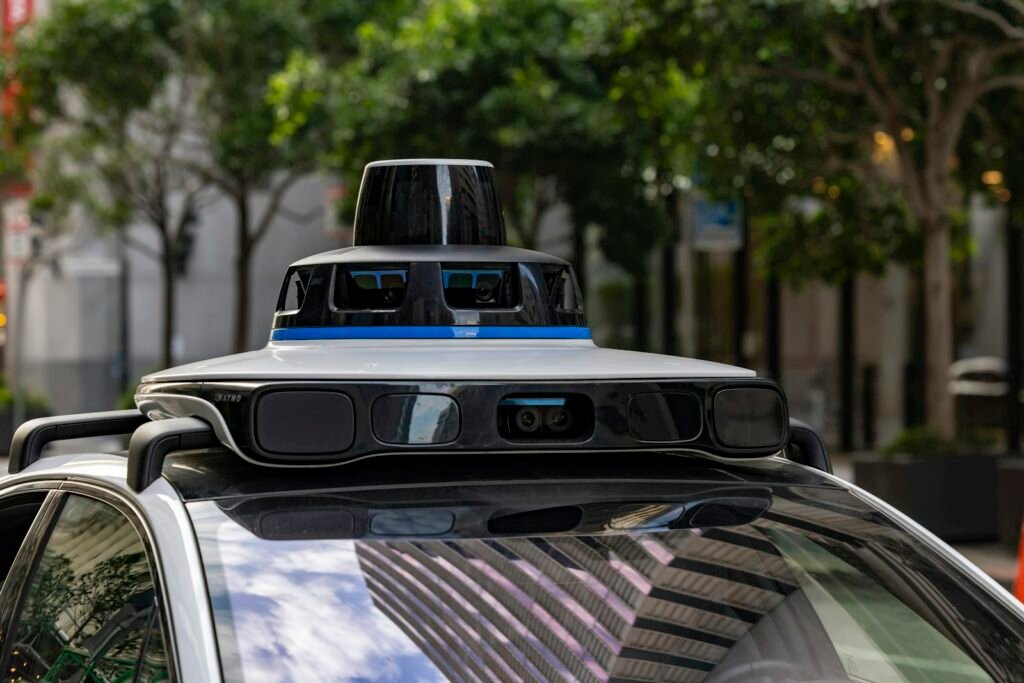
Waymo isn’t starting with empty cars. Electric Jaguar I-PACE vehicles — the same model the company has used to expand across the United States — began appearing on roads in the Madrid region within days of the announcement, each with a trained safety specialist behind the wheel. That’s phase one of a three-step plan Waymo laid out in its own blog post: ordinary manual driving first, to map the area and gather data; then “technical validation,” in which specialists keep their hands on the wheel while the Waymo Driver software learns to read Madrid’s roundabouts, narrow lanes, and pedestrian crossings; and only after that, a shift to autonomous operation and, eventually, a public rider service. The company says it wants to welcome its first Madrid passengers in 2027, without naming a specific month.
Waymo says it is coordinating the rollout with Spain’s national Directorate-General for Traffic, which oversees autonomous-vehicle testing permits, as well as regional and local authorities in the Community of Madrid. It also says it is briefing local emergency services on how to interact with its vehicles before any of them operate without a safety driver — a step the company has taken in every U.S. market before removing human backup from its cars.
The Pitch: 20 Million Rides and a Safety Record
Waymo is leaning on scale to make its case abroad. The company says its robotaxis have now completed more than 20 million autonomous rides and are carrying hundreds of thousands of paying passengers a week in the U.S. cities where it already runs commercial service. It also cites more than 400 million fully autonomous kilometers driven, and says its vehicles have been involved in roughly 95 percent fewer crashes causing serious injury or worse than human drivers average in those same cities. Those are Waymo’s own reported figures rather than independently audited results, but they track with crash data the company has published and submitted to regulators and insurers in past U.S. filings.
“Madrid is an incredible capital of innovation, and we share the region’s commitment to safer, more accessible, zero-emission mobility.”
— Tekedra Mawakana, co-CEO, Waymo
Spain’s Road-Safety Groups Roll Out the Welcome Mat
Waymo’s announcement was accompanied by public support from two Spanish road-safety organizations, a detail the company highlighted prominently in its own post. Ignacio Lijarcio, president of the Spanish Road Safety Foundation (FESVIAL), said autonomous driving can help prevent mistakes, anticipate risks, and save lives. Mar Cogollos, director of the Spanish Association for the Study of Spinal Cord Injury (AESLEME), went further, noting that human error is behind more than 90 percent of road accidents and arguing that autonomous vehicles remove risks like distraction, fatigue, and speeding entirely from the equation.
Not the Only Robot Chasing Madrid
Waymo’s announcement doesn’t give it a clear field. Uber and China’s WeRide have both said they intend to launch robotaxi service in Madrid before the end of 2026 — meaning Spain’s capital could end up hosting competing driverless fleets within months of each other, well before Waymo’s own cars are cleared to carry paying riders. The timing also fits a broader pattern at Waymo: after raising $16 billion from investors in February at a valuation north of $100 billion, the company said it planned to expand into more than 20 cities during 2026, including first-ever stops in Tokyo and London.
For drivers in Madrid watching an unfamiliar white Jaguar glide past with a stranger’s hands still on the wheel, the moment a truly empty one shows up is still a year or more away. In the meantime, the only extra set of eyes on most of the city’s roads will keep belonging to ordinary human drivers — a growing number of whom are turning to an affordable 4K dash cam of their own to keep a record of whatever ends up sharing the lane with them next.
As an Amazon Associate, TrendScope Daily earns from qualifying purchases made through links in this article.
Quick questions
Is Waymo launching in Europe?
Yes. On October 20 Waymo announced it is preparing a fully driverless ride-hailing service in the Region of Madrid, its first in continental Europe.
Are Waymo cars in Madrid driverless yet?
Not yet. Electric Jaguar I-PACE cars are driving with trained safety specialists behind the wheel as the first phase of a three-step plan.
Who else wants to run robotaxis in Madrid?
Uber and China’s WeRide have both said they plan driverless cars on Spanish streets before the end of 2026.
Related on TrendScope Daily
- AI Companion Apps Are a Real Industry Now — Here’s How the Major Ones Actually Compare
- Samsung’s First AI Glasses Are Landing This Month, Taking Aim at Meta’s Ray-Bans
- Google, OpenAI, Anthropic and Microsoft Back One AI Training Opt-Out Signal
- More Tech & AI stories: browse the Tech & AI section