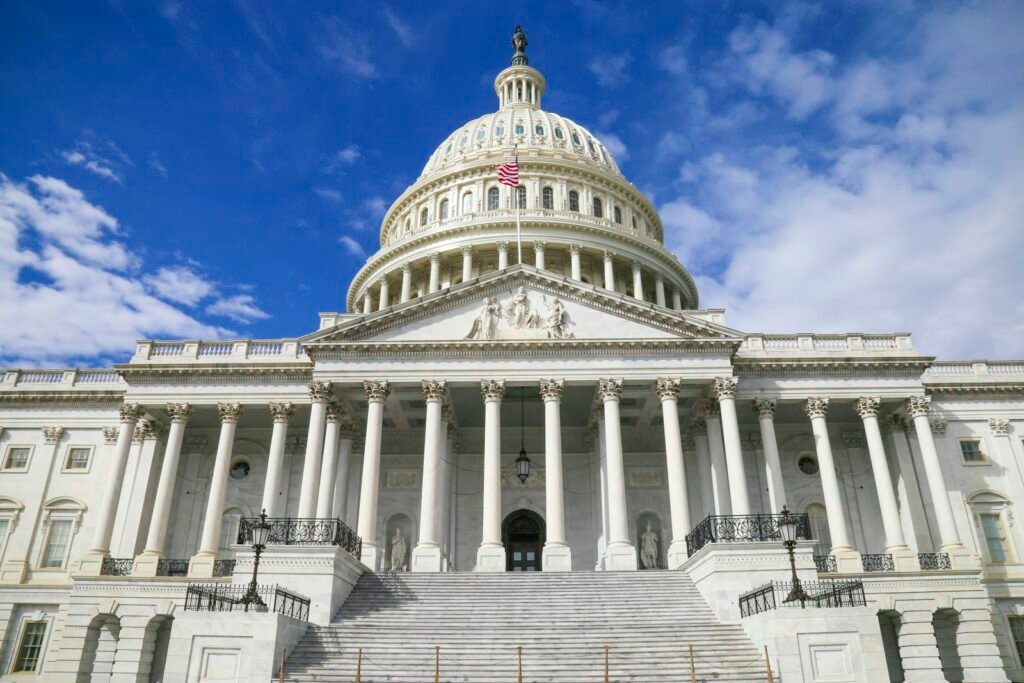
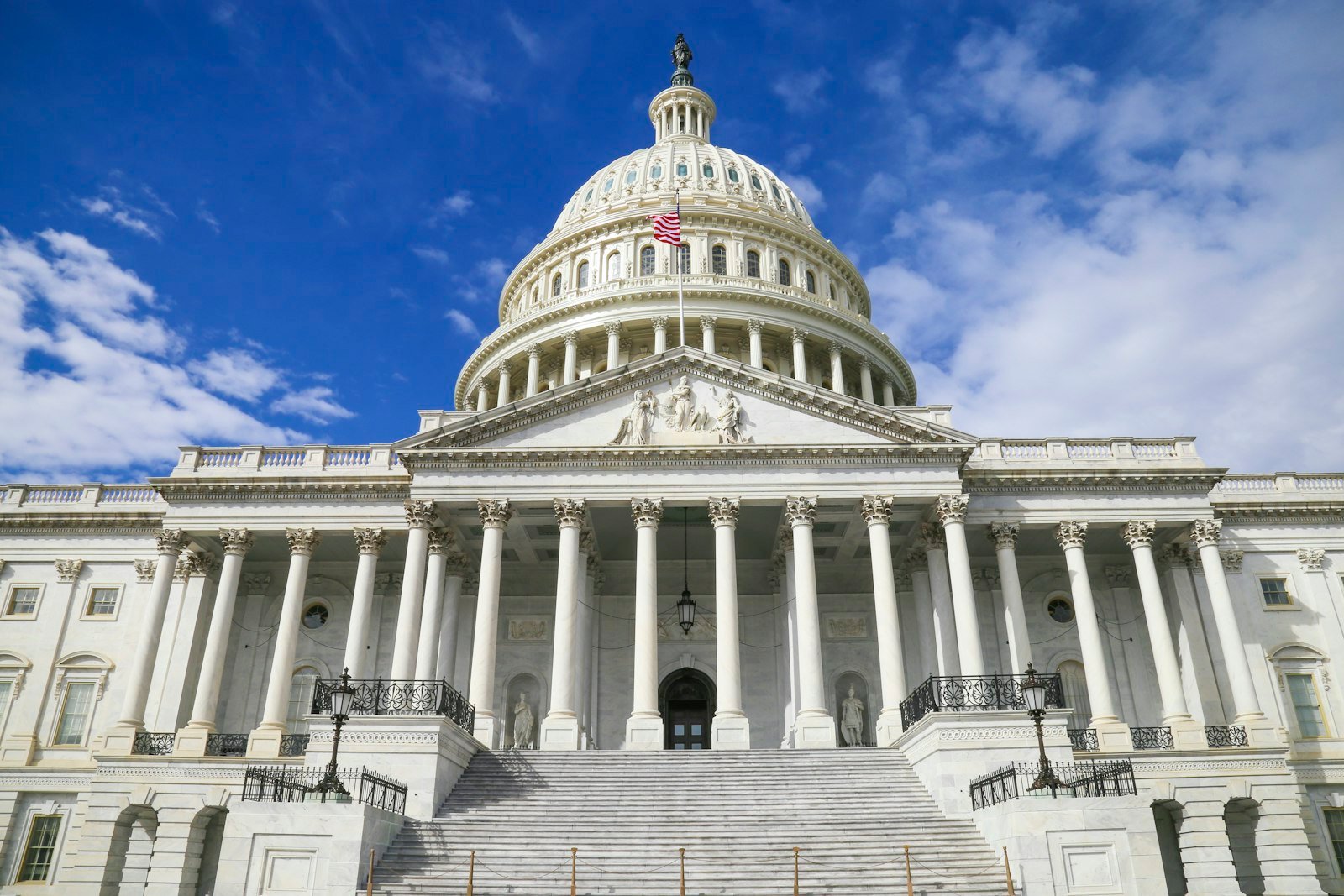
If “superintelligence” has suddenly been everywhere in your feed, there’s a specific, dateable reason: on September 29, 2026, the Trump administration issued an executive order directing federal agencies to replace the term “artificial intelligence” with “Super Intelligence” — SI, for short — in official communications. A day later, executives from OpenAI, Anthropic, Google, Meta, Nvidia, and xAI stood alongside the president at the White House to sign what’s now being called the White House Accord on Super Intelligence. The rebrand has triggered genuine confusion, several pointed political rebuttals, and — because this is also a domain-name story — a quiet scramble by speculators to register anything with “SI” or “superintelligence” in it before everyone else catches on.
The White House Just Tried to Retire the Term “AI”
The executive order’s core argument is that “artificial intelligence” undersells what frontier systems have become, and that the word “artificial” carries baggage the administration wants gone. Trump put it bluntly at the signing: “The name is now super intelligence. That’s not a hoax, in fact it’s the exact opposite.” Agencies have been told to use “Super Intelligence” “to the maximum extent permitted by law” across correspondence, websites, reports, and policy documents going forward, though existing regulations and historical records don’t need to be rewritten. The administration also gave itself 60 days to propose formal legislative language defining the term, since for now “SI” is simply mapped onto the existing statutory definition of AI under 15 U.S.C. § 9401(3).
The rebrand arrived with a practical companion piece: the White House simultaneously launched America.gov, billed as a unified, conversational “SI-powered” front door to federal services, built on the existing Login.gov authentication system and aimed initially at government services with more than 100,000 annual users. It’s administered jointly by the General Services Administration and the Office of Management and Budget, and the framing throughout is administrative modernization rather than new legislation — a government chatbot layer, dressed in new terminology.
Who Signed On, Who Pushed Back
The signing lunch produced its own small drama. Nvidia’s Jensen Huang embraced the new vocabulary most enthusiastically, going as far as rebranding his company’s data centers as “super intelligence factories.” Elon Musk, attending for xAI, was reportedly caught mid-sentence saying “AI” before correcting himself to “SI.” David Sacks, Trump’s former AI czar, publicly celebrated the accord. Meta had, in fairness, already been using “superintelligence” in its own branding since it stood up Meta Superintelligence Labs in June 2025 — this is less a reversal for Mark Zuckerberg’s company than a vindication.
Not everyone played along. California Governor Gavin Newsom signed a state executive order explicitly requiring California agencies to keep using “artificial intelligence.” Senator Bernie Sanders introduced a bill with the pointed name “Ban Artificial Superintelligence Act.” AI safety researcher David Krueger warned publicly that swapping the term muddies already-difficult safety conversations rather than clarifying anything. And at the same press conference where the accord was signed, Google’s Sundar Pichai, OpenAI’s Greg Brockman, and Anthropic’s Dario Amodei all kept saying “AI” out of habit or preference — with Amodei notably the only one of the three to use the moment to stress that “the technology has real risks,” regardless of what it’s called.
Public opinion hasn’t moved much yet: surveys taken after the announcement show only about 9% of respondents prefer “SI” or “super intelligence,” against 53% who still reach for “artificial intelligence.” That gap is exactly why this is a story and not just a vocabulary footnote — a presidential rebrand that most people haven’t adopted is, by definition, still being litigated in public.
Why the Search Numbers Moved
Axios reported that search interest in “superintelligence” spiked immediately after the September 30 announcement, even though the term still trails “artificial intelligence” by a wide margin in absolute volume. That tracks with how search behavior normally responds to a sudden, contested piece of news: a term that used to live almost entirely inside AI-research circles (where “superintelligence” has a specific technical meaning — a system that substantially exceeds human cognitive performance across virtually every domain) got dropped into mainstream political and business coverage overnight, and curious, confused, or skeptical readers went looking for context. The controversy itself — Newsom’s countermove, Sanders’ bill, the 9%-versus-53% survey gap — is generating a second wave of search activity on top of the original announcement, which is a pattern that tends to have more staying power than a single news cycle.
The Domain Land Grab Already Underway
Wherever a term suddenly starts trending in politics and tech coverage at once, domain speculators move fast — often faster than the news cycle itself. We ran WHOIS lookups on a range of “SI” and “superintelligence” domain names while reporting this piece, and the pattern is unmistakable. SIAccord.com was registered on September 22, 2026 — a week before the formal signing. SIRoadmap.com followed on September 24. SIInsider.com was already registered by September 19. Older but thematically adjacent names tell a similar story: Meta’s Superintelligence Labs launch in mid-2025 was followed within weeks by registrations like SuperintelligenceFactory.com and SIBranding.com. None of this proves coordinated insider knowledge — DC policy moves this size rarely come together without weeks of leaks and lobbying — but it does show that whoever is tracking this space is moving on it immediately, not waiting for the news to settle.
SI Domain Names Still Available Right Now
We checked live WHOIS records (not just a registrar’s upsell page, which can be misleading) on a shortlist of SI-themed names tied directly to this story. As of publication, the following had no registration on record at all — meaning they’re open to be registered through any ICANN-accredited registrar, Namecheap among them:
TheSIAccord.com — the closest thing to an on-the-nose name for the actual policy event; useful for anyone building explainer content, a newsletter, or a tracker around how the accord gets implemented.
SIFactoryDaily.com — a direct nod to Jensen Huang’s “super intelligence factories” line, with an obvious fit for anyone covering AI infrastructure and data-center buildouts under the new terminology.
SITerminology.com — a natural home for tracking how fast (or slowly) “SI” actually replaces “AI” across government, media, and corporate language over the next year.
SuperintelligenceTracker.com — longer, but descriptive and brandable for a dashboard-style site following lab announcements, model releases, and policy developments.
SIReadiness.com — fits the corporate-consulting angle cleanly; “AI readiness” is already a whole industry, and the terminology shift gives this name a head start if “SI readiness” becomes the next buzzphrase enterprises pay consultants to assess.
SIExplained.com — a straightforward explainer/education brand for the inevitable wave of “wait, what’s the difference between AI and SI?” content.
SIChronicle.com — a clean, publication-style name for anyone building a dedicated news outlet around the superintelligence beat specifically.
A Quick Reality Check Before You Buy One
Two honest caveats belong here. First, domain availability changes by the minute — these names were confirmed unregistered via direct WHOIS lookup at the time this article was written, but that status can flip the moment this piece goes live, let alone days from now, so verify before you check out. Second, this is not financial advice, and TrendScope isn’t claiming any of these names will appreciate in value. Buzzword-adjacent domain names occasionally sell for real money — ai.com reportedly changed hands for eight figures — but the overwhelming majority of speculative domain registrations never resell at all, and registering one is a bet on a trend holding its relevance, not a guaranteed return. Treat this list as a starting point for your own research, not a recommendation.
The Bottom Line
The substance under all of this is still an open question: renaming “artificial intelligence” to “super intelligence” doesn’t change what the technology actually does, and critics like Sanders and Krueger have a real point that it may just make an already-confusing public conversation about AI risk harder to have. But as a pure attention event, the rebrand has clearly worked — it’s gotten a specialist term out of research papers and into the White House briefing room, state-versus-federal politics, and now, predictably, the domain registration ledgers. Whether “SI” sticks the way “AI” did is genuinely unclear. What’s already certain is that somebody is betting it will, and they started buying before the ink on the executive order was dry.