MEDICINE & HEALTHCARE
By TrendScope Daily Team · November 15, 2026
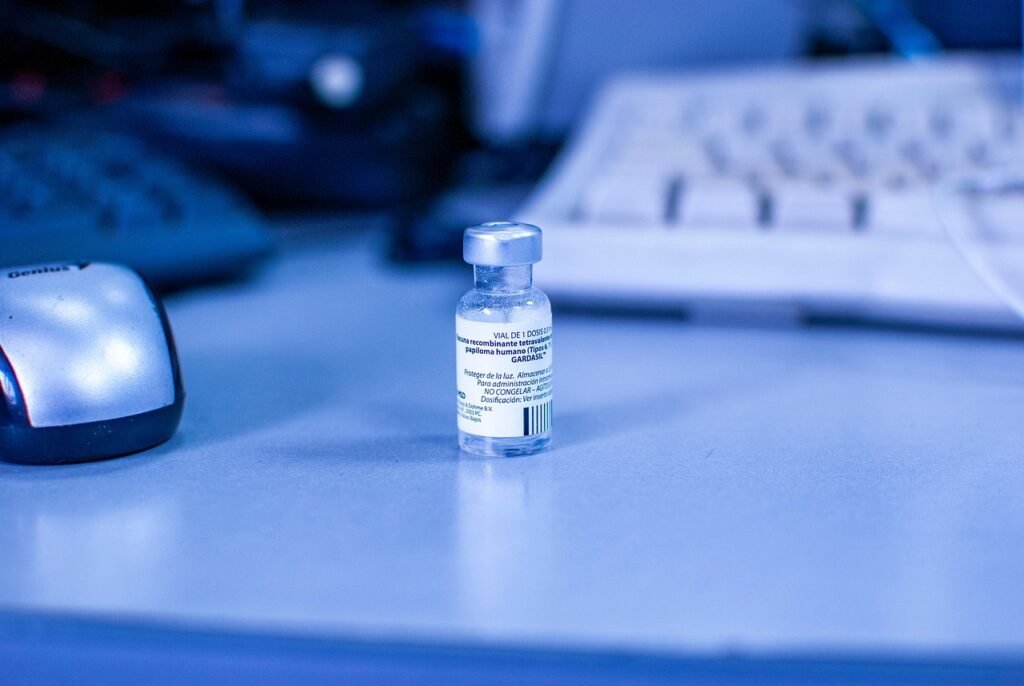
India’s free HPV vaccine is a single, government-funded dose of Gardasil given to 14-year-old girls under the National HPV Vaccination Campaign, launched in February 2026. By September 2026, the drive had delivered more than 80 lakh (eight million) doses nationwide, aiming to cut India’s heavy cervical cancer toll.
“With every vaccination, India takes another step towards a healthier, cancer-free future for its daughters.”
— Union Ministry of Health and Family Welfare, on the campaign crossing 80 lakh doses
What Is India’s National HPV Vaccination Campaign?
Prime Minister Narendra Modi launched the campaign in Ajmer, Rajasthan, on 28 February 2026, calling it India’s first nationwide human papillomavirus (HPV) immunisation drive. It offers a single dose of Gardasil, a vaccine that protects against four HPV types (6, 11, 16 and 18), free of cost to 14-year-old girls at government health facilities, with parental consent required. The government estimates roughly 1.2 crore girls reach this age each year, and officials have said the programme aims to vaccinate more than one crore girls annually, repeating for each new cohort that turns 14.
HPV vaccination isn’t new to India — it was first introduced in the private market in 2008, and small state-level programmes ran in Punjab and Sikkim from 2016. What changed in 2026 is that it became part of the Universal Immunisation Programme for the first time, delivered through government schools, health sub-centres and ASHA/ANM outreach, with coverage tracked on the Centre’s U-WIN digital platform.
Who Is Eligible for India’s Free HPV Vaccine, and How Many Girls Are Covered So Far?
Eligibility is simple: the free dose is for girls aged 14, given once, with a parent or guardian’s consent, at a government facility. It is voluntary — there is no penalty for opting out, and the vaccine is not (yet) offered to boys or to other age groups under this national scheme.
As of the Health Ministry’s update on 11 September 2026 — the most recent official figure publicly available at the time of writing — the campaign had crossed 80 lakh doses nationally. Coverage against each state’s identified target population varied widely: Gujarat, Uttar Pradesh, Madhya Pradesh and Mizoram had reached 100%; Bihar, Andhra Pradesh and Assam were above 90%; and Uttar Pradesh led in absolute numbers, with more than 22 lakh adolescent girls vaccinated. No newer nationwide tally had been published as of mid-November 2026.
Why Cervical Cancer Vaccination Matters for India
India carries the world’s heaviest cervical cancer burden. According to GLOBOCAN 2022 data cited by Gavi, the Vaccine Alliance, India records over 120,000 new cervical cancer cases and nearly 80,000 deaths every year — the highest death toll of any country and close to a quarter of all cervical cancer deaths worldwide. Researchers at the International Agency for Research on Cancer estimate that roughly 1 in 50 girls born in India will develop cervical cancer in her lifetime. Almost all cervical cancers are linked to persistent infection with high-risk HPV types, which the vaccine is designed to prevent before exposure.
Gardasil vs Cervavac: Which HPV Vaccine Does India Actually Use?
Two quadrivalent HPV vaccines are relevant to India, but only one is part of the free government programme.
| FACTOR | GARDASIL | CERVAVAC |
|---|---|---|
| Maker | Merck | Serum Institute of India |
| Used in the free national campaign? | Yes, exclusively | No — private market only |
| HPV types covered | 6, 11, 16, 18 | 6, 11, 16, 18 |
| Dose schedule relevant here | Single dose for girls aged 14, under the national scheme | Being studied as a single dose in an ICMR trial in girls aged 9–14, started November 2024 |
| Regulatory status | WHO-prequalified; in global use since 2006 | Seeking WHO prequalification; not yet granted as of September 2026 |
Is the HPV Vaccine Safe? What the Evidence and the Courts Say
Gardasil has been in global use since 2006 and is now part of national immunisation programmes in more than 160 countries, with over 55 crore (550 million) doses given worldwide, according to figures the Centre presented in court. The World Health Organization’s HPV fact sheet describes the vaccine’s safety profile as well established through nearly two decades of monitoring, with most reactions limited to mild, short-lived effects such as soreness at the injection site, mild fever, or brief dizziness — a reaction seen with injections generally in adolescents, not unique to this vaccine.
The rollout has not gone unchallenged. In July 2026, the Delhi High Court heard a public interest petition (Dr. Sujata Mittal & Anr v. Union of India and Others) alleging the drive lacked proper informed consent and citing a small number of individual adverse-event reports from Tamil Nadu, Gwalior and Bihar. A division bench of Chief Justice Devendra Kumar Upadhyaya and Justice Tejas Karia declined to stay the programme on 29 July 2026, noting the Centre’s data showed “no immediate harm,” while leaving the broader question of the vaccine’s introduction for a later hearing.
What the evidence shows: large-scale global data and WHO monitoring support a strong overall safety record for Gardasil in adolescents. What it does not show: as of mid-November 2026, no India-specific, publicly released safety-surveillance report covering this national campaign had been published separately, and the individual adverse-event claims cited in the court petition have not been independently confirmed by health authorities to have been caused by the vaccine, according to the court record.
Sources: World Health Organization – HPV and cervical cancer fact sheet; News on Air / Press Information Bureau feed, 11 September 2026; LiveLaw, Delhi High Court order, 29 July 2026.
Parents who want a clear, doctor-reviewed explainer on vaccines and child health to keep at home may find a plain-language reference book useful; see, for instance, this parents’ guide to childhood and adolescent vaccines on Amazon.in.
As an Amazon Associate, TrendScope Daily earns from qualifying purchases made through links in this article.
Quick questions
Who is eligible for India’s free HPV vaccine?
Girls aged 14 can get a single, free dose of Gardasil at government health facilities with parental consent, under the National HPV Vaccination Campaign. The scheme does not currently cover boys or other age groups.
How much does the HPV vaccine cost in India?
It is free at government centres under the national campaign. Outside the scheme, private HPV vaccination had generated up to roughly ₹95 crore in annual sales in India before the free rollout began, per Gavi estimates, reflecting its earlier, higher out-of-pocket cost.
Is the HPV vaccine linked to serious side effects?
WHO’s global monitoring over nearly two decades and the Centre’s submissions in the Delhi High Court both point to a generally mild side-effect profile. A pending court petition over individual adverse-event reports has not changed the rollout as of November 2026.
Related on TrendScope Daily
- Cancer Drug Prices Fall Up to 93% Under New NPPA Order
- India’s First Dengue Vaccine Won’t Reach the Market Until 2027
- Fake Rabies Vaccine Alert: How to Check Abhayrab’s QR Code
- More Medicine & Healthcare stories: browse the Medicine & Healthcare section
- All our health explainers: Health Explained hub
- Today’s full roundup: Trending Today in India: November 15, 2026
This article is for general information and is not medical advice. Please consult a qualified doctor about your own health.