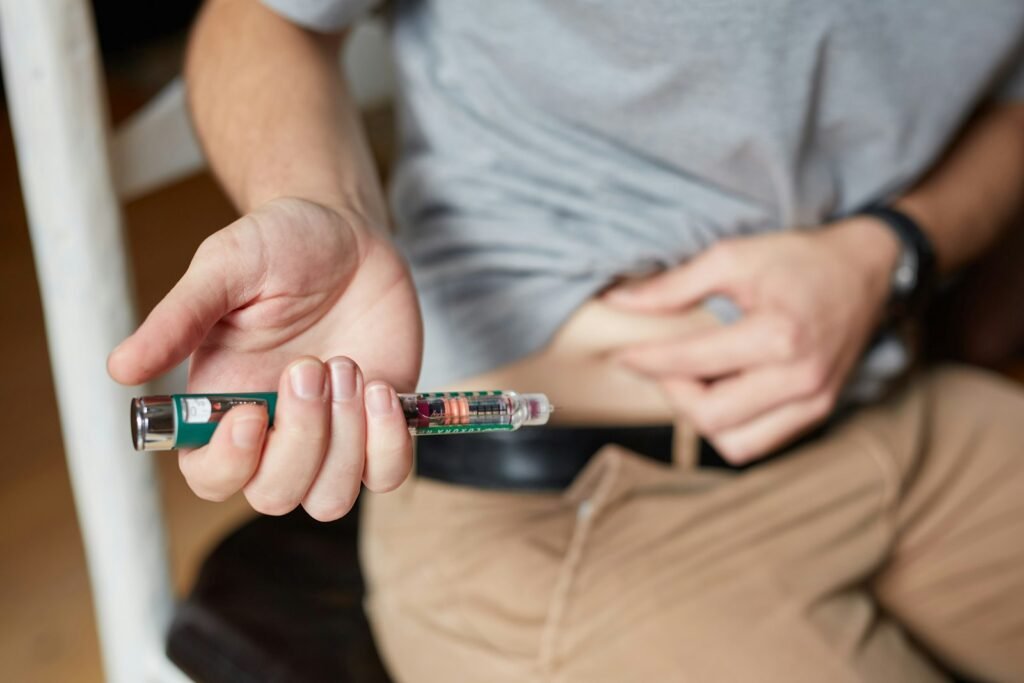
A new Rutgers University study published this week in the journal Annals of Internal Medicine has added fresh evidence to a question that’s been quietly worrying doctors and patients since GLP-1 drugs like Ozempic and Wegovy became household names: can these medications damage your eyesight? The answer, according to the research, is a qualified yes — the risk is real but small, and the numbers tell a more nuanced story than the headlines circulating this week suggest.
What the Rutgers Researchers Actually Found
The study, titled “Glucagon-like Peptide-1 Receptor Agonists and Risk for Ischemic Optic Neuropathy,” was led by Chintan V. Dave, an associate professor at Rutgers’ Ernest Mario School of Pharmacy, along with co-authors Kamika R. Reynolds, Kimberly M. O’Malley, and Jason A. Roy. The team analyzed a large U.S. database of adults aged 18 to 65 with Type 2 diabetes who had recently started a new diabetes medication, comparing those on GLP-1 receptor agonists — a class that includes semaglutide (sold as Ozempic and Wegovy) and tirzepatide (sold as Mounjaro and Zepbound) — against patients on other diabetes drugs.
What they were tracking is a condition called ischemic optic neuropathy, in which reduced blood flow starves the optic nerve of oxygen. More than 80% of these cases take a specific form known as non-arteritic anterior ischemic optic neuropathy, or NAION — a condition that can cause sudden, often permanent, vision loss in one eye. Over an 18-month follow-up window, the researchers found roughly three to four additional NAION cases per 10,000 patients treated with GLP-1 drugs compared to patients on other diabetes medications. Dave described the finding in blunt terms: “Although ischemic optic neuropathy was rare, it is clinically important because it can involve sudden vision loss.”
Critically, the researchers stopped short of calling this a cause-and-effect relationship. People with Type 2 diabetes already carry elevated risk for optic nerve damage from the disease itself, and the study’s retrospective design can’t fully untangle how much of the added risk comes from the drug versus from underlying patient health. The cases skewed toward men and toward patients in the older half of the study population, roughly ages 50 to 65.
It Builds on an Earlier Warning Sign
This isn’t the first data point raising the question. Earlier in 2026, a separate analysis published in the British Journal of Ophthalmology mined more than 30 million adverse-event reports filed with the FDA between December 2017 and December 2024, isolating roughly 32,000 reports tied to semaglutide — about 3,000 linked to Wegovy and nearly 21,000 linked to Ozempic. That analysis found the odds of ischemic optic neuropathy were about five times higher among Wegovy users than Ozempic users, despite both drugs sharing the same active ingredient, with no cases reported at all for the oral version, Rybelsus.
Benjamin Bert, an ophthalmologist at MemorialCare Orange Coast Medical Center who wasn’t involved in that study, called the Wegovy-Ozempic gap surprising given the identical active ingredient, floating dosing differences — Wegovy is prescribed at higher weekly doses for weight loss than Ozempic typically is for diabetes — as a possible explanation that researchers should examine directly. Dimitra Skondra, a professor of ophthalmology at NYU Grossman School of Medicine, offered a more cautious read: the finding shows an association worth watching, she said, but GLP-1 users frequently already have diabetes, obesity, or cardiovascular disease, all of which independently raise optic nerve risk — meaning well-controlled prospective studies, not retrospective report-mining, are what’s really needed to settle the question.
What NAION Actually Does — and the Odds of Recovery
NAION typically strikes without warning, causing a sudden drop in vision in one eye, sometimes noticed on waking up. Unlike a detached retina, it generally isn’t treatable with surgery. The Rutgers study notes that about one-third of affected patients regain some vision, usually within the first six months, but most are left with some degree of permanent impairment. It’s that irreversibility — not the raw odds — that explains why ophthalmologists are paying close attention despite the low absolute risk.
What This Means If You’re on Ozempic, Wegovy, Mounjaro, or Zepbound
Neither study is a reason to panic, and neither Rutgers nor the FDA has issued new prescribing restrictions as a result. Tens of millions of people are currently using GLP-1 drugs for diabetes and weight management, and an absolute risk of three to four extra cases per 10,000 patients means the overwhelming majority will never experience this. But both research teams are calling for continued safety monitoring, and doctors say patients — particularly men over 50 who are already managing diabetes or cardiovascular risk factors — should know the warning signs: sudden blurring or vision loss in one eye warrants an immediate call to an eye doctor, not a wait-and-see approach.
For anyone managing Type 2 diabetes alongside a GLP-1 prescription, routine monitoring remains one of the simplest ways to stay ahead of complications. A reliable blood glucose monitor for home use is a low-cost way to keep closer tabs on day-to-day control while the research on GLP-1 side effects continues to develop.
Both research teams agree on the central caveat: this is an association, not proven causation, and the absolute risk remains low. But as GLP-1 drugs continue expanding into weight-loss use far beyond their original diabetes indication, expect vision risk to be one of the first things regulators and researchers revisit as more data accumulates.
As an Amazon Associate, TrendScope Daily earns from qualifying purchases made through links in this article.