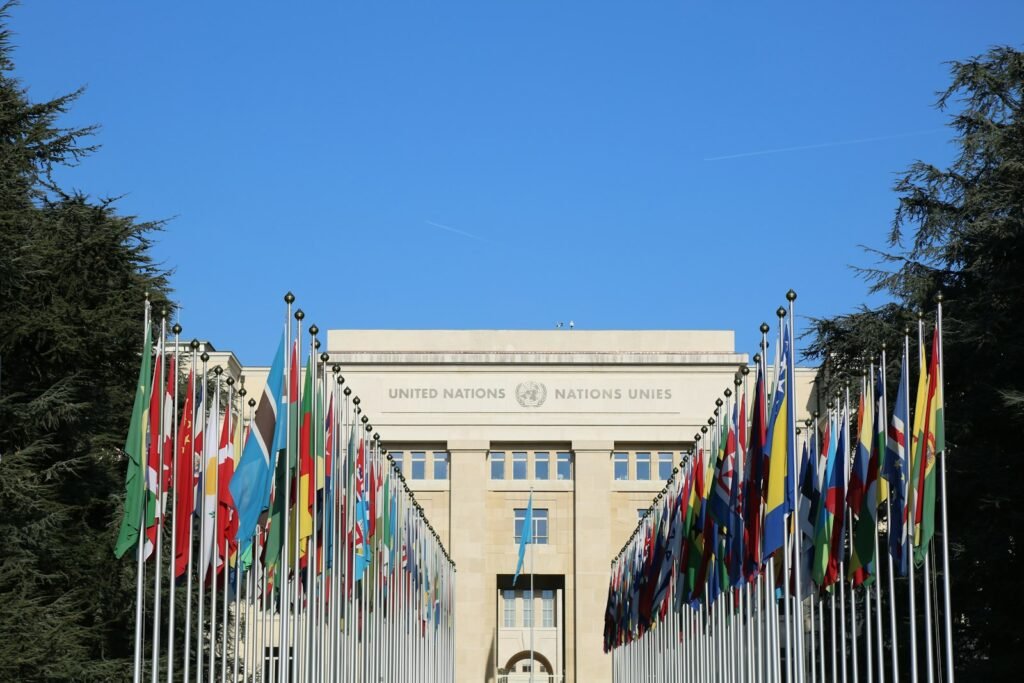
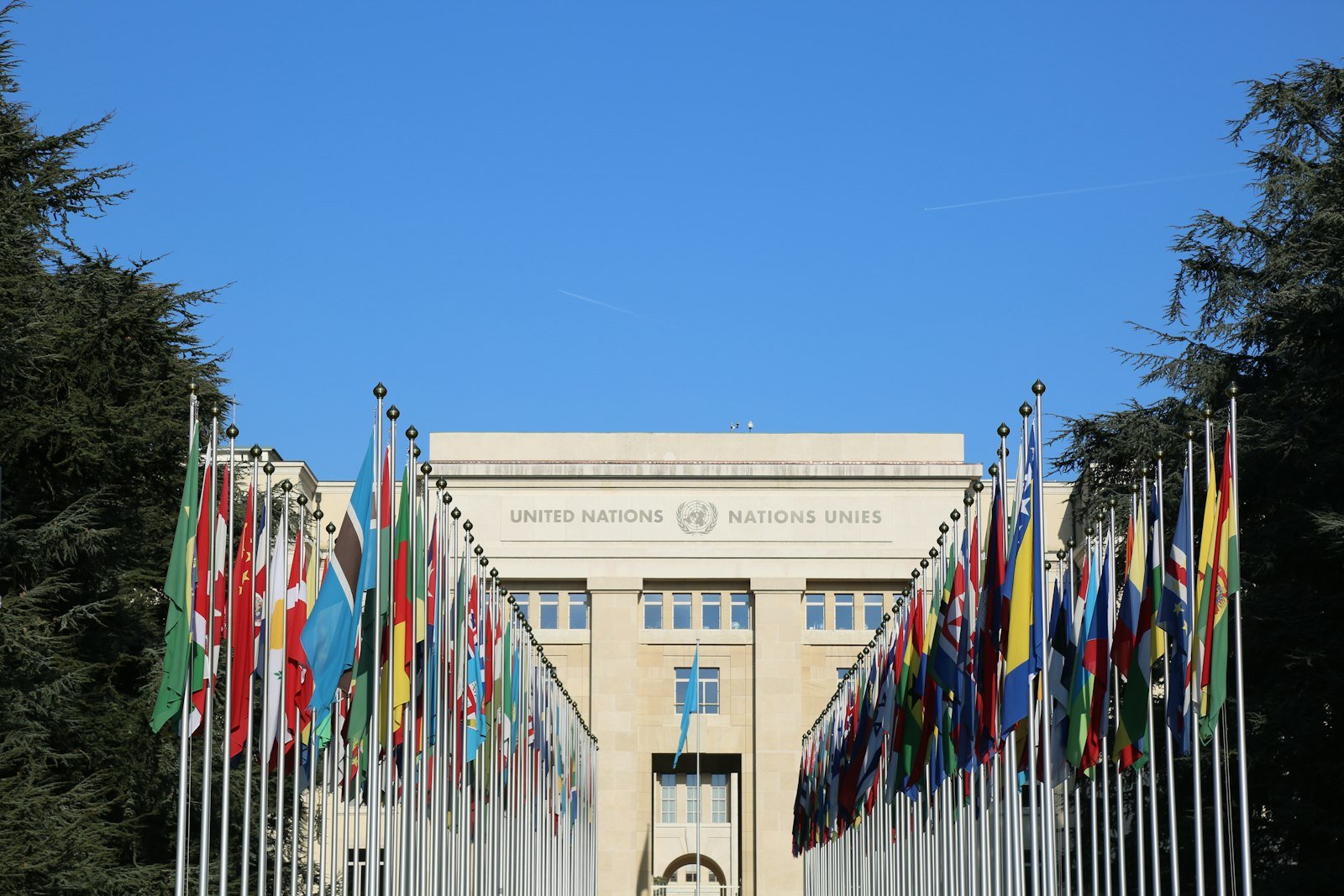
On September 23, 2026, something unusual happened at the United Nations Security Council in New York: the men who run the world’s most powerful and most competitive AI labs sat, in effect, on the same side of the table. Sam Altman of OpenAI and Dario Amodei of Anthropic — rivals who rarely agree publicly on much of anything — both told the Council that the industry they lead needs global rules before it outruns anyone’s ability to write them. The meeting, convened by France during the 81st UN General Assembly, was one of the first times AI safety has been debated at this level of the UN’s own security architecture, and it exposed just how far apart the people who might actually write those rules still are.
A Rare Shared Stage for Rivals
The Security Council session brought together an unusual mix of voices: the chief executives of OpenAI and Anthropic, Hugging Face co-founder and CEO Clément Delangue, Microsoft President Brad Smith, and Yoshua Bengio, the Turing Award-winning researcher who now chairs an Independent International Scientific Panel on AI. It is the kind of lineup that normally shows up at a product keynote or an industry conference, not a Security Council chamber. Their presence there was itself a signal: AI has moved, in the space of a few years, from a topic UN bodies mentioned in passing to one serious enough to warrant a dedicated session of the Council’s most senior forum, building on a first nonbinding UN resolution on AI passed in 2024 and two new AI-focused UN bodies stood up over the past year.
What Altman and Amodei Actually Told the Council
Amodei, appearing by video, was blunt about the stakes as he sees them: “If managed poorly, I even believe AI could be a risk to humanity as a whole.” He pointed to concrete near-term dangers — the possibility that advanced models could help a terrorist group work toward a bioweapon, or that future systems could become difficult for their own developers to control — while also stressing the technology’s upside for science and medicine. Altman struck a similar note but pushed harder on process, warning that the world could “lose control of the future of AI” and arguing that decisions about how the technology is governed “must be shaped through democratic processes,” not left to any single company or country. He called for faster incident reporting when AI systems misbehave and for shared international safeguards, but was careful to frame what he wanted: “these standards should not lock in incumbents or favor one business model over another. They must support open and closed model developers, new entrants and established labs, national authority and international cooperation.”
The Scientists’ Warning
If the CEOs’ language was calibrated, Bengio’s was not. Speaking for the Independent International Scientific Panel on AI, he told the Council that “the dangers are real and imminent,” describing the pace of AI development as an unprecedented governance challenge that existing international institutions were not built to handle. That framing — risk that is already here rather than theoretical and distant — is a harder sell to make to national governments than a hypothetical worst case decades out, and it put pressure on the room to treat the meeting as more than a symbolic gesture.
Washington’s Pushback
The clearest disagreement in the room came from the United States. Michael Kratsios, representing the Trump administration, rejected the entire premise of centralized global oversight, saying the US would “totally reject all efforts by international bodies to assert centralised control” over AI. That stance sits inside a broader pattern this year of Washington resisting binding multilateral AI rules while continuing to compete aggressively with China on model capability — a tension that several speakers acknowledged directly. Delangue, whose Hugging Face platform hosts open-source models from around the world, added a wrinkle of his own: he said his company had been targeted by rogue AI agents originating from OpenAI’s ecosystem and had defended itself partly using Chinese-built models that face fewer restrictions than their Western counterparts — a reminder that the fragmentation the CEOs warned about is already showing up in day-to-day security incidents, not just in future scenarios.
Agreement in the Room, Not on the Rules
Brad Smith offered perhaps the most concrete proposal of the session, backing independent evaluators for advanced AI systems and mechanisms — effectively “off switches” — that would let humans halt a system judged to be behaving dangerously. But the meeting closed without anything binding, and without the US or China signaling they were ready to cede authority to a new global body. What the session did make clear is that the industry’s own leaders no longer see voluntary, company-by-company safety commitments as sufficient — even as they disagree, sometimes sharply, on whether that oversight should come from national governments, an international scientific panel, or some hybrid the UN has not yet designed. For a technology moving as fast as this one, that gap between recognizing the problem and agreeing on who solves it may end up being the story of the next year, not just this week at the UN.