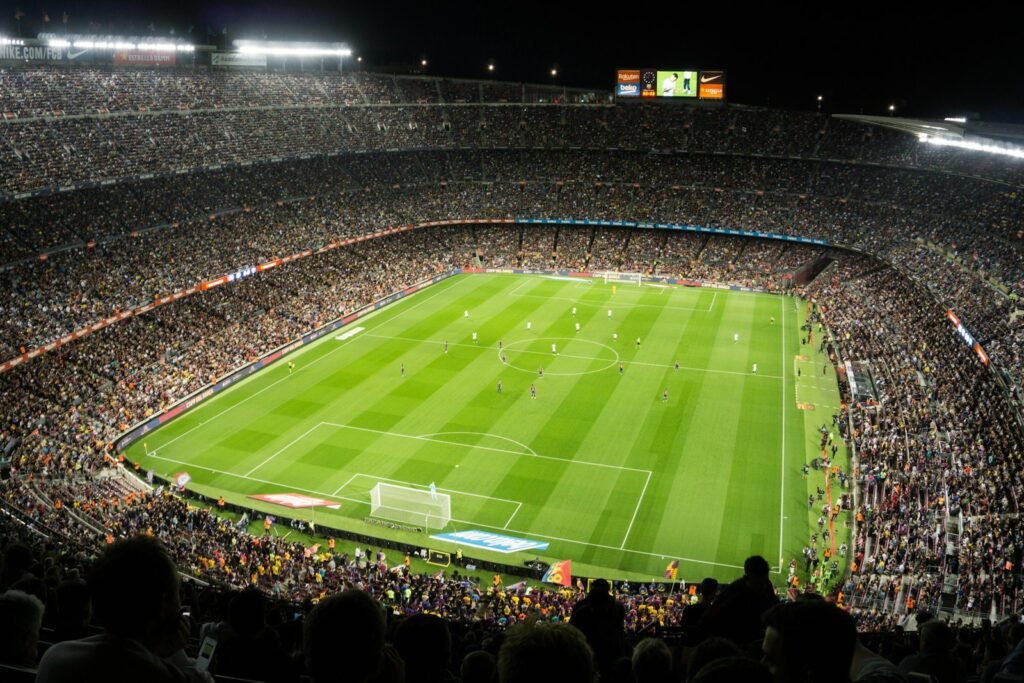
The 2026/27 Champions League league phase kicked off earlier this month, and Matchday 1 wasted no time reminding everyone why this competition draws a global audience unlike almost anything else in club sport. Several of Europe’s traditional powerhouses opened with statement wins, a handful of results already look like early tone-setters, and the competition’s expanded league-phase format means every one of these results carries more mathematical weight than it used to.
The results that made the biggest statement
Barcelona’s 5-1 demolition of Feyenoord and Bayern Munich’s 5-0 thrashing of Bodø/Glimt were the two most one-sided results of the opening round, and both sent the same message: this season’s favorites intend to make their case early rather than ease in. PSG matched that energy with a 6-1 win over Slovan Bratislava, the single highest-scoring result of Matchday 1. For teams with genuine title ambitions, opening with a five- or six-goal margin does more than secure three points — it starts building the goal difference that can matter enormously once the league phase standings get tight in the final rounds.
The results that raised eyebrows
Not every traditional heavyweight had it easy. Real Madrid needed a 2-1 win over Inter in a genuine top-versus-top clash, while Manchester City’s 2-0 away win at Porto was solid without being dominant. Liverpool’s 2-1 win over Atlético de Madrid came in a tighter match than the scoreline might suggest. Meanwhile, a few results hinted at competitive balance spreading further than usual: Como’s 4-1 win over Leipzig and Real Betis’s 3-2 victory over Lille were the kind of results that complicate the usual assumptions about which clubs are safe bets to advance.
The draws that will matter later
Three matches ended level — Fenerbahçe 1-1 Roma, PSV Eindhoven 1-1 Shakhtar Donetsk, and Stuttgart’s 3-1 scoreline masking a genuinely competitive first half against Viking. Draws rarely make headlines the way a rout does, but in a league-phase format where every team plays a condensed schedule against a spread of opponents, a single dropped point in round one can be the difference between direct knockout-round qualification and a playoff round in the final standings. Fenerbahçe and Roma, in particular, will both want to look back on Matchday 1 as a point salvaged rather than two points lost once the table fills in.
A quick refresher on how the format works now
For anyone who fell off following the competition before its 2024 overhaul: there are no more small groups of four. All 36 clubs now sit in a single league table, each playing eight different opponents across the season rather than the old six-team round-robin. The top eight advance directly to the knockout rounds; the next group plays a playoff round to join them. That’s why a single Matchday 1 result carries more long-term weight than it used to — there’s no group to quietly recover in, just one long table where every match adjusts your position against all 35 other clubs at once.
What Matchday 1 tells us about the season ahead
One round is never enough to draw firm conclusions, but Matchday 1 did what an opening round is supposed to do: it separated the teams playing with real intent from the ones still finding their form. Barcelona, Bayern, and PSG all looked like teams built to go deep. Real Madrid, Manchester City, and Liverpool all won, but with more competitive resistance than their names alone would suggest. And clubs like Como and Real Betis served early notice that this season’s league phase may have more surprises in it than the traditional hierarchy would predict. With the schedule running nearly weekly from here, the next few matchdays will start showing which of those early impressions actually hold.